
Goodson Gazette
Holes in Your Head … Or The Fine Art of Crack Detection
Let’s talk about why we check for cracks in heads and blocks. The obvious reason is that you can’t fix what you don’t know is there. Cracks and pinholes in heads and blocks can lead to a loss of power in the engine, resulting in poor performance. That, unfortunately, is the best-case scenario. Cracks or pinholes can also lead to overheating and complete engine failure, not to mention dissatisfied customers returning again and again in search of that elusive leak.Use your 3-D Fast Cut™ System to Remove Valve Seat Inserts Without Damaging the Counterbore
If you’ve been working on cylinder heads for any time at all, you’ve had to remove a valve seat insert or two, so you know it’s not an easy job. Those suckers are in there tight – and they’re supposed to be – but that makes it tough to get them out. Find out how to use the 3-D Fast Cut System to remove seat inserts.4 Ways to Produce an Ideal Cylinder Head Surface Finish
Produce an ideal cylinder head finish with these four tips: 1. Dress and True the Wheel, 2. Use the Proper Wheel Speed, 3. Use Grinding Fluid, 4. Select Top Quality Abrasives.
Increase the life of your crankshaft polisher with routine maintenance
Help stop premature motor failure by simply spending a few seconds every day to perform routine maintenance on your polisher.
- Use regulated compressed air or a vacuum to remove abrasive and metal particles that have accumulated in the electric motor during normal operation.
- Remove frayed belt threads that collect on roller bearings.
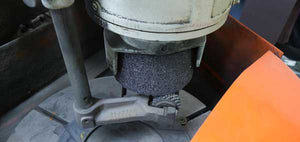
6 Ways to Improve Flywheel Grinding Stone Performance
Use these tips to get better results, longer stone life and lower-cost flywheel grinding.
1) Match the stone to the material.
Most American automotive flywheels are cast iron. Most truck, bus and agricultural flywheels are cast steel. High-performance and a few import flywheels are billet steel.
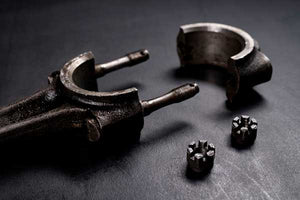
The Hows & Whys of Measuring Rod Bolt Stretch
Most engine rod failures aren’t from faulty parts, they’re from improper installation. When you’re installing the rods you need to check the rod bolt stretch by performing a series of torqueing and loosening and recording the readings. It sounds like a lot of work, but in the end, it will save you time and the possibility of a failed engine rod along with all of the damage that can cause.Micrometer best practices
We’re going to back up a little to something that’s an essential skill to have in engine machining or any kind of machining for that matter.
You MUST know how to operate and read and care for a micrometer. It sounds, elementary, I know, but sometimes it pays to go back to the basics for a quick review. For the sake of this article, I’ll be talking about an inch micrometer. Most people think of an outside micrometer when they hear the term “micrometer”. An “outside micrometer” is one that measures the outside of something such as diameter, length, thickness.